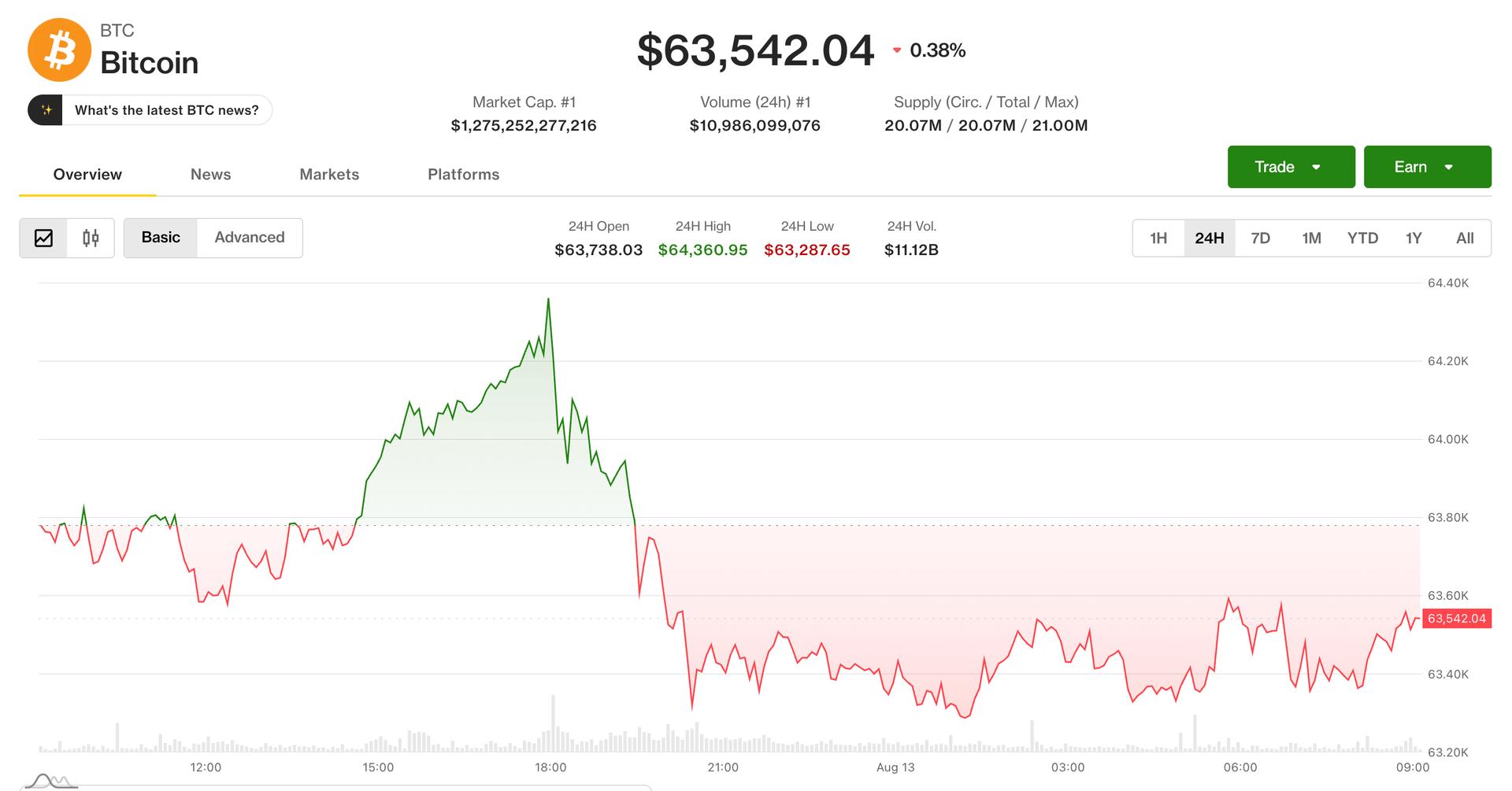
Bitcoin traded around $63,500 after the July U.S. CPI report removed some inflation anxiety but failed to deliver the kind of surprise that usually produces a strong crypto move. BTC was down a little more than half a percent on the day and remained roughly 2% lower over the week.
Headline CPI rose 0.1% month over month and 3.4% from a year earlier. Core inflation, excluding food and energy, increased 0.2% on the month and eased to 2.5% annually. Futures markets cut the implied chance of a September Federal Reserve rate increase to about 38% from 46% before the release, but a result this close to consensus was not enough to become a new crypto catalyst.
CF Benchmarks research head Gabe Selby noted that bitcoin tends to react most when inflation data forces investors to rethink the rate path. In the three downside inflation surprises among the previous nine releases, BTC gained an average of about 3.25%, according to figures cited by CoinDesk. July's report did not create that kind of repricing, and gold and equities absorbed the news more positively than most major crypto assets.
Attention now moves to the Jackson Hole central-bank gathering, the Sept. 4 employment report and the Sept. 11 CPI release. For bitcoin, that leaves a stretch in which macro data may matter more than an inflation print that has already been digested. The report reduced one tail risk, but it did not settle the larger question of how long the Fed can keep policy where it is.