Orenix.net is built around a simple idea: there should be a verification layer between “I saw a signal” and “I opened a position.” Not another stream of promises, but a place where a trading idea can be structured, compared with the market regime, stress-tested for risk, observed in demo, and only then considered for further action. Orenix is therefore better understood as a connected workflow of analytical and trading tools rather than one indicator or a “bot that knows the future.”
What Orenix.net is and which problem it tries to solve
Crypto trading produces too many inputs. One user receives a Telegram signal, another studies a chart, a third notices an unusual move in a screener, and a fourth reacts to a news event. The real problem comes next: an idea can turn into a live position far too quickly.
Orenix adds an intermediate layer. It helps formalize the trade, show market context, evaluate risk and preserve the scenario in a form that can be reviewed later. In the public product this appears as several connected components: Screener, Market Mood, Signal Verifier, Demo and Terminal, strategy tooling and Orenix Radar.
Not price prophecy, but a testable scenario
The public Screener presents probabilistic movement scenarios, forecast levels and reversal risk. The important word is **scenario**, not promise. A useful forecast includes conditions under which it becomes invalid.
Several starting points, one workflow
A user does not need to begin with a coin. The starting point can be a third-party signal, a manually created idea, a market move, an existing demo position or an event discovered in Radar.
The core product loop
At a high level Orenix connects four actions: **discover → verify → test → manage**. Each stage should inherit context from the previous one instead of beginning from scratch.

Screener and Market Mood: establish context before judging one asset
The Screener is a natural entry point into Orenix. Its job is not simply to rank coins by 24-hour performance. The public interface presents roughly one-to-two-day movement scenarios, probability estimates and reversal risk.
Market Mood adds a broader regime layer. That matters because the same technical setup can mean something very different in a calm market than during a broad risk-off move.
Context matters more than an attractive percentage
A statement such as “the asset may rise” is incomplete without additional questions: is the move already stretched, where does the scenario fail, what is the broader market doing, how large is the downside and is the entry already late?
Orenix tries to put those questions into one workflow instead of forcing the user to assemble several unrelated services manually.
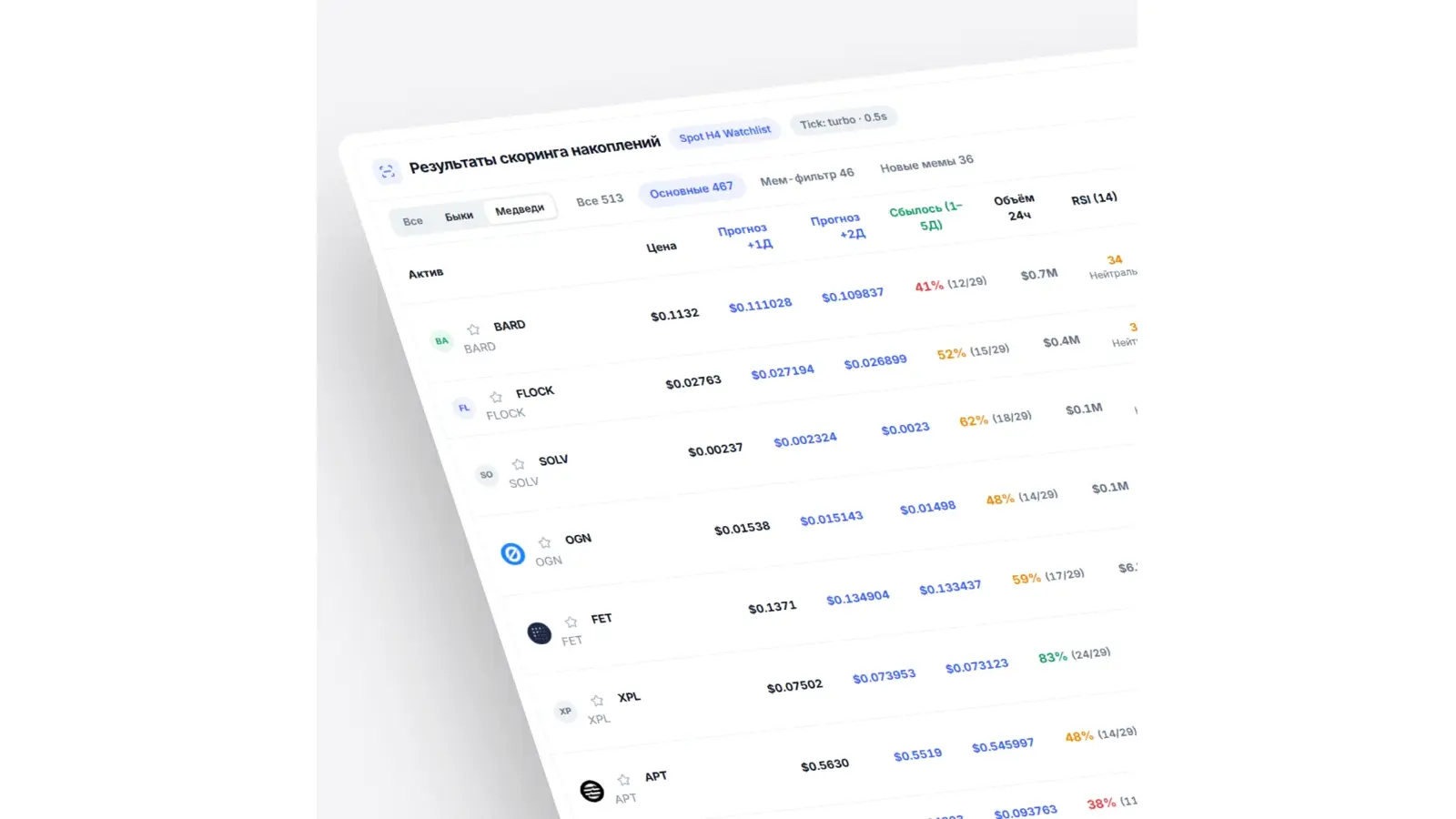
A forecast level is not automatically a take-profit target
A forecast can guide analysis, while an actual trade still requires entry, Stop Loss, Take Profit, position size and acceptable risk. That is where the Signal Verifier becomes useful.
Signal Verifier turns a message or idea into a structure that can be audited
One of the central Orenix features is pre-trade verification. A user can paste a Telegram signal or enter parameters manually. The system extracts the pair, direction, entry, stop and targets, then evaluates the structure of the trade.
This translation is more important than it looks. A third-party signal is usually written as prose; a risk system needs numbers and explicit conditions. Signal Verifier turns unstructured intent into a formal scenario.
What should be checked before pressing Buy or Sell
- whether there is enough room between entry and Stop Loss;
- whether Take Profit produces a meaningful Risk/Reward ratio;
- whether direction agrees with current market context;
- whether the entry arrives too late after an existing impulse;
- which event invalidates the thesis;
- whether leverage leaves enough tolerance for normal volatility.
A score should summarize the analysis, not replace it
A single number is convenient, but the useful information lives underneath it: the reason for risk, stop structure, projected path and weak point of the setup. A good interface should explain why a trade is 72/100 rather than simply displaying the number.
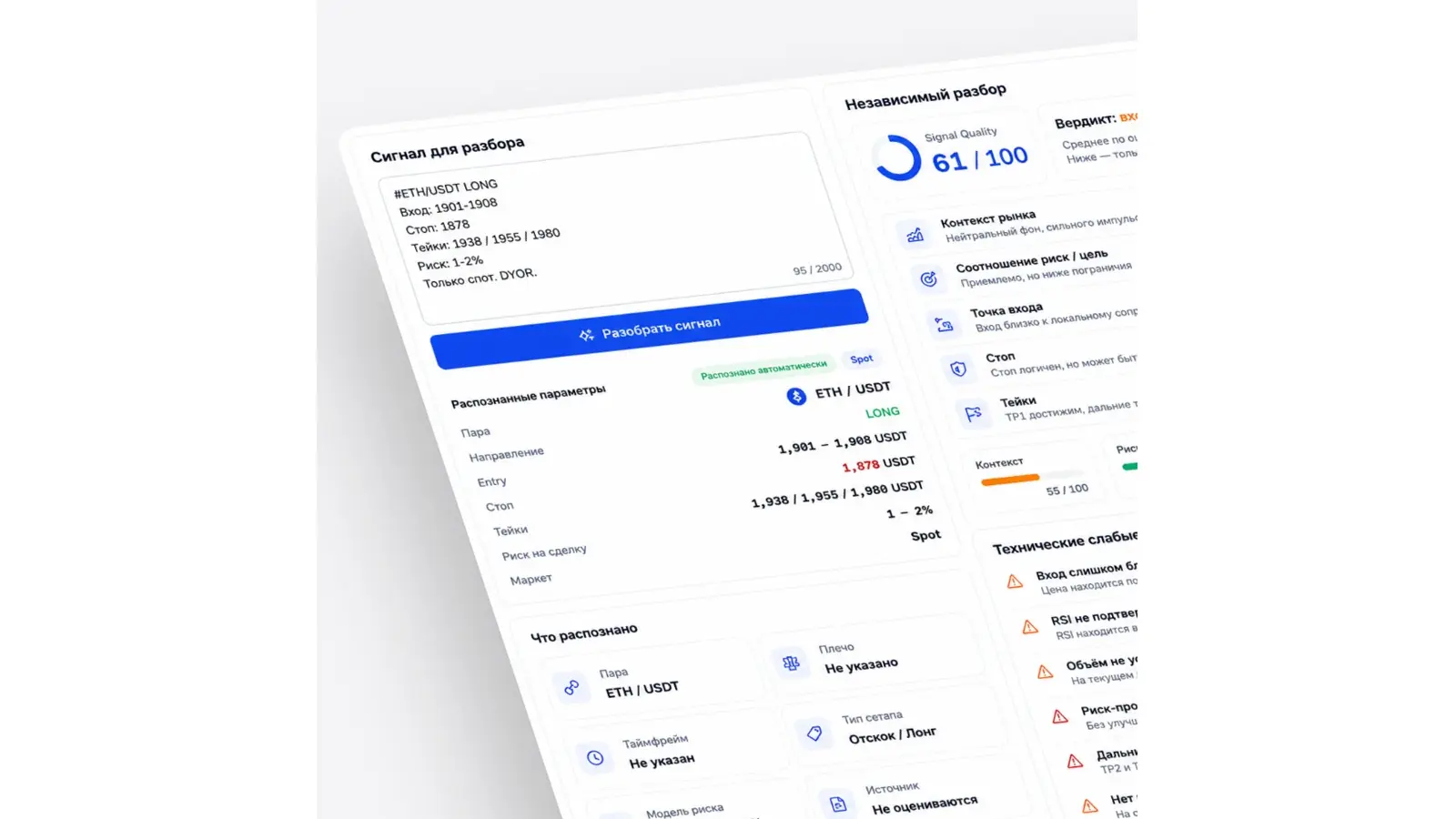
Third-party signals benefit the most from a deliberate pause
When a trader receives dozens of confident Telegram messages, the dangerous habit is treating the author's certainty as a substitute for personal risk analysis. Verifier creates distance between the message and the action.
Demo and paper trading: an idea should survive the market before money depends on it
Orenix publicly places demo and paper testing before live connectivity. This is not merely a visual simulation. It is a way to observe how a defined trade behaves in the live market without risking actual capital.
A user can open a demo position, define Entry, Stop Loss and Take Profit, and watch what happens after the original signal. The difference between an attractive idea at publication time and the behavior of a position several hours later becomes visible.
Demo is useful beyond beginner education
Experienced traders can use paper mode for a different purpose: testing a new workflow, strategy logic, risk size or unfamiliar market regime without disturbing their main trading process.
Trade history matters more than one successful outcome
One profitable demo trade proves very little. Value appears when a ledger accumulates: which scenarios were opened, where stops were hit, how price traveled toward targets, which entries were early and which were late.
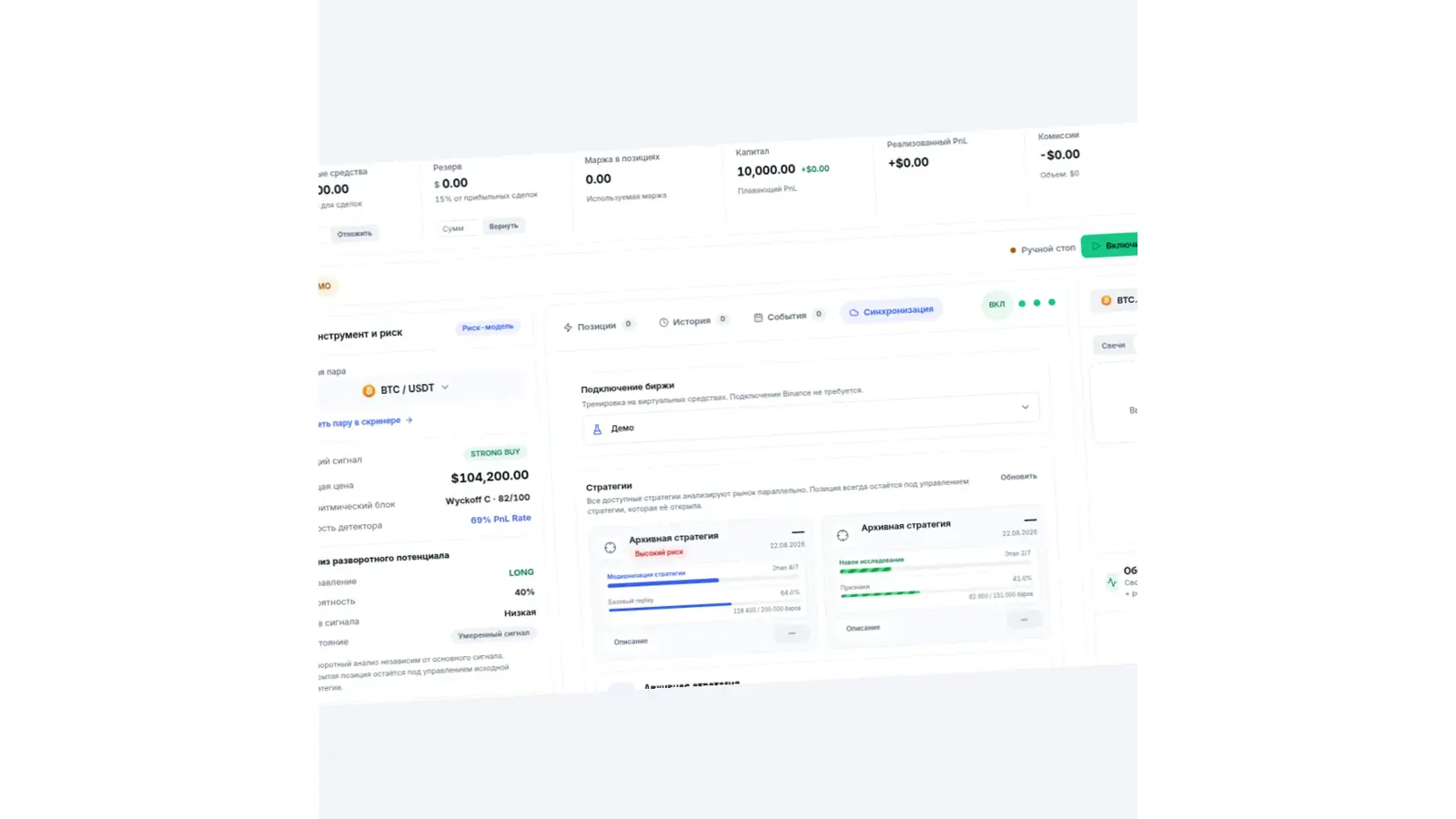
Demo should not imitate the feeling of “already trading.” Its purpose is to accumulate evidence about how specific rules behave in a live market.
Terminal and risk control: a position is a process after entry
Trading products are often described as if the workflow ends once an order opens. Risk does not. Price moves toward or away from the stop, volatility changes, part of the expected move can materialize, and assumptions can become stale.
Orenix Terminal combines position state with market context. Public product descriptions emphasize Stop Loss, Take Profit and exit-condition control, as well as the ability to stop automated management.
Risk management begins before position sizing
Trade parameters need to make sense together. A very tight Stop Loss with high leverage can be technically valid while creating a fragile position. A distant Take Profit can look attractive while being unrealistic for current volatility.
User control is a separate product requirement
Orenix publicly emphasizes that automated management can be stopped and exchange connectivity can be disabled. Automation should extend an explicitly defined risk scenario rather than transfer every decision to an opaque black box.
Protective orders belong to the scenario
Stop Loss and Take Profit are meaningful only when the system understands their relationship to entry and what should happen when the market regime changes.
Signal Mesh and strategies: multiple approaches instead of one universal indicator
The public Orenix White Paper describes a strategy layer and Signal Mesh. The underlying idea is that one universal signal rarely behaves equally well across every market regime.
Trend-following logic can work in directional markets and struggle in ranges. Mean-reversion approaches can exhibit the opposite behavior. A multi-strategy architecture is conceptually more honest than pretending that one score is equally valid everywhere.
A strategy should own the trade it created
In any multi-model system, origin matters. If one strategy generated a position, its lifecycle and later evaluation should preserve that ownership instead of mixing logic from unrelated approaches.
Strategy research needs more than an attractive equity curve
The public White Paper gives research its own section. That matters because backtests are easy to overfit. Stronger research needs separated evaluation periods, controls against repeatedly reusing results and paper-forward observation.
The more sophisticated the strategy, the less convincing “it made money on the historical chart” becomes. Value comes from a process that makes retrospective answer-fitting harder.
Orenix Radar adds an information layer before the trading decision
Radar is Orenix's public feed of verified crypto events and long-form Expert articles. Its purpose differs from the Screener. Radar asks what events and technical changes could alter an asset's context, rather than simply what its current chart looks like.
Protocol upgrades, security incidents, governance, listings, infrastructure releases and evergreen technical explainers can coexist in the feed. This reduces the risk of analyzing a chart in an information vacuum.
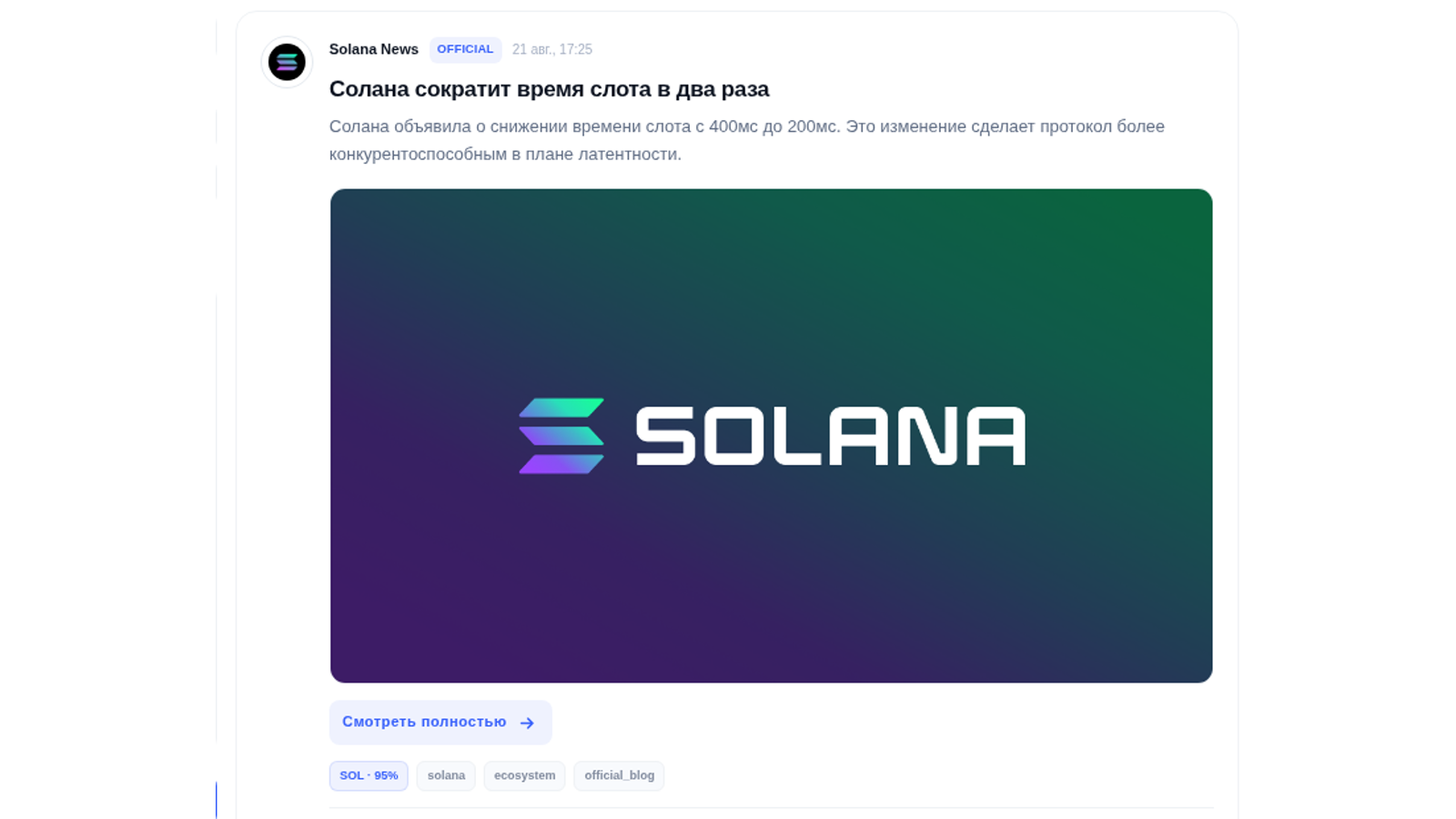
News should not automatically become a trading signal
Even an important event can already be priced in, have a delayed effect or be irrelevant to a specific setup. Radar should provide context while the trade still passes through a separate risk-verification process.
Expert articles serve a different time horizon
A short news item answers “what happened?” A long-form article answers “how does this mechanism work?” Keeping both formats in one research layer helps connect current events with durable mental models.
Exchange connectivity: funds remain with the user, but API risk still exists
The public Orenix model does not require transferring assets into a separate service wallet. Funds remain at the exchange and connectivity is established through an API.
The homepage states several safety principles: no withdrawal permission for the trading key, encrypted storage of the secret portion, permission checks and the ability to disable connectivity.
No-withdrawal permission is important but not absolute protection
A trading-enabled key can still be dangerous if compromised. An attacker may open unwanted positions, alter exposure or create losses through execution. Disabling withdrawals removes one attack class; it does not turn a trading key into harmless public information.
Connectivity should not automatically enable live execution
The public description emphasizes staged readiness: permissions, selected market and protective-order readiness are checked first. This is a sensible boundary—having an API connection should not automatically mean real orders are authorized.
| Stage | What is checked | Why it matters |
|---|---|---|
| Signal | Entry, stop, targets, direction | Eliminate obviously weak setups |
| Context | Screener, Market Mood, Radar | Avoid isolated analysis |
| Demo | Live price path without real funds | Observe the lifecycle |
| Risk | Position logic and protective conditions | Bound scenario failure |
| Connectivity | API permissions and market readiness | Do not confuse connection with execution authority |
| Live decision | Separate user decision | Preserve control |
What Orenix should not promise a user
No honest trading platform can guarantee market direction. A 70% probability does not force one specific trade to win; a strong backtest does not guarantee the same future distribution; protective orders reduce risk without eliminating gaps, slippage or exchange failures.
The public Orenix White Paper contains an explicit limitations section. That belongs in the product story rather than in tiny legal text. Forecasts are probabilistic, data can become stale, and live execution introduces its own failure modes.
Good products expose uncertainty
It is more useful to say “the scenario is strong but breaks here” than “AI is 93% certain.” A risk-aware interface should explain the boundary of a conclusion.
Humans remain part of the system
Even when management is automated, the user chooses acceptable risk, authorizes operating modes and can stop the workflow. This is an important boundary between decision support and a promise of autonomous profit.
How the pieces form one workflow
Viewed separately, Screener, Verifier, Demo, Terminal and Radar can look like five products. Their value becomes clearer when they are used sequentially.
Imagine a LONG signal arriving in Telegram. The user does not open a position immediately. Verifier parses entry, stop and targets. Screener shows whether the asset is already near the edge of its projected move, Market Mood shows whether the broader market supports risk, and Radar reveals whether a significant event is nearby.
The idea then moves to demo. Several hours later the user can see how it handled actual volatility. Only after repeating this process does the trader gain evidence about whether that type of setup deserves further trust.
Orenix as a decision journal rather than only an idea generator
The most useful effect may not be producing more signals. It may be forcing discipline: each entry gets a reason, risk boundary, context, outcome and history.
The system becomes more useful when the user disagrees with it
If Orenix reports weak Risk/Reward while a trader still believes the setup is strong, that is a productive moment. Why should the stop be there? Which information is missing? Explicit disagreement is more valuable than passively following a score.
The main conclusion
Orenix.net is an attempt to connect the entire path from market observation to controlled execution in one system. Screener discovers and describes scenarios, Market Mood adds market regime, Signal Verifier structures the trade idea, Demo observes it in live conditions without real funds, Terminal tracks position state, strategies provide independent approaches, and Radar contributes news and fundamental context.
The strongest idea in that architecture is not “finding the perfect entry.” It is making decisions auditable. The user can see where an idea came from, which assumptions support it, where risk sits and what happened after entry.
In one sentence, the Orenix philosophy can be described as: **do not trade faster—verify better, and automate only the process whose rules are already understood.**
FAQ
Does Orenix buy and sell crypto without the user doing anything?
The platform includes demo or paper workflows and automated-management tools, but the public model emphasizes user control and staged readiness. Connecting an exchange does not itself mean live orders are automatically authorized.
Can Orenix be used only to verify somebody else's signal?
Yes. Signal Verifier can start from a pasted signal or manually entered trade parameters without requiring the user to adopt the entire automated trading workflow.
Why use Demo after a trade receives a strong score?
A score evaluates structure and context at analysis time. Demo observes the lifecycle that follows: volatility, timing, Stop Loss behavior and the path toward targets.
Does Radar issue trading signals?
Radar is primarily an information and research layer. A news event or Expert article provides context but should not automatically become a command to buy or sell.
Where are funds held when an exchange is connected?
According to the public Orenix description, funds remain at the exchange and access is provided through API connectivity. Trading keys are intended to operate without withdrawal permission.