TON is better understood not as “one fast chain” but as a system of interconnected blockchains. The **masterchain** stores global configuration and validator-related state, **workchains** define rule and account spaces, and a workchain can dynamically split into **shardchains** under load and merge again when load falls. Smart-contract execution is asynchronous: an external request usually triggers one account transaction, which creates internal messages that later execute on other accounts, potentially in other shards. The Telegram ecosystem is a powerful distribution and UI layer through Mini Apps, wallets and TON Connect, but it does not replace TON validator consensus.
TON is a blockchain of blockchains rather than one sequential chain
Current TON documentation describes the network as a collection of workchains. This matters because one user operation can touch several account states and create a chain of asynchronous messages.
The masterchain stores global coordination state
The masterchain uses workchain ID **−1** and carries global configuration, system contracts and state needed to coordinate the network.
The basechain is the main user and application workchain
Most ordinary accounts and smart contracts live in workchain **0**, called the basechain. A TON address includes the workchain ID, making network context part of account identity.
Workchains can define distinct rules
The architecture allows different address formats, transaction formats and virtual machines for future workchains. Current user activity is concentrated in the basechain, but the abstraction is wider than one VM.
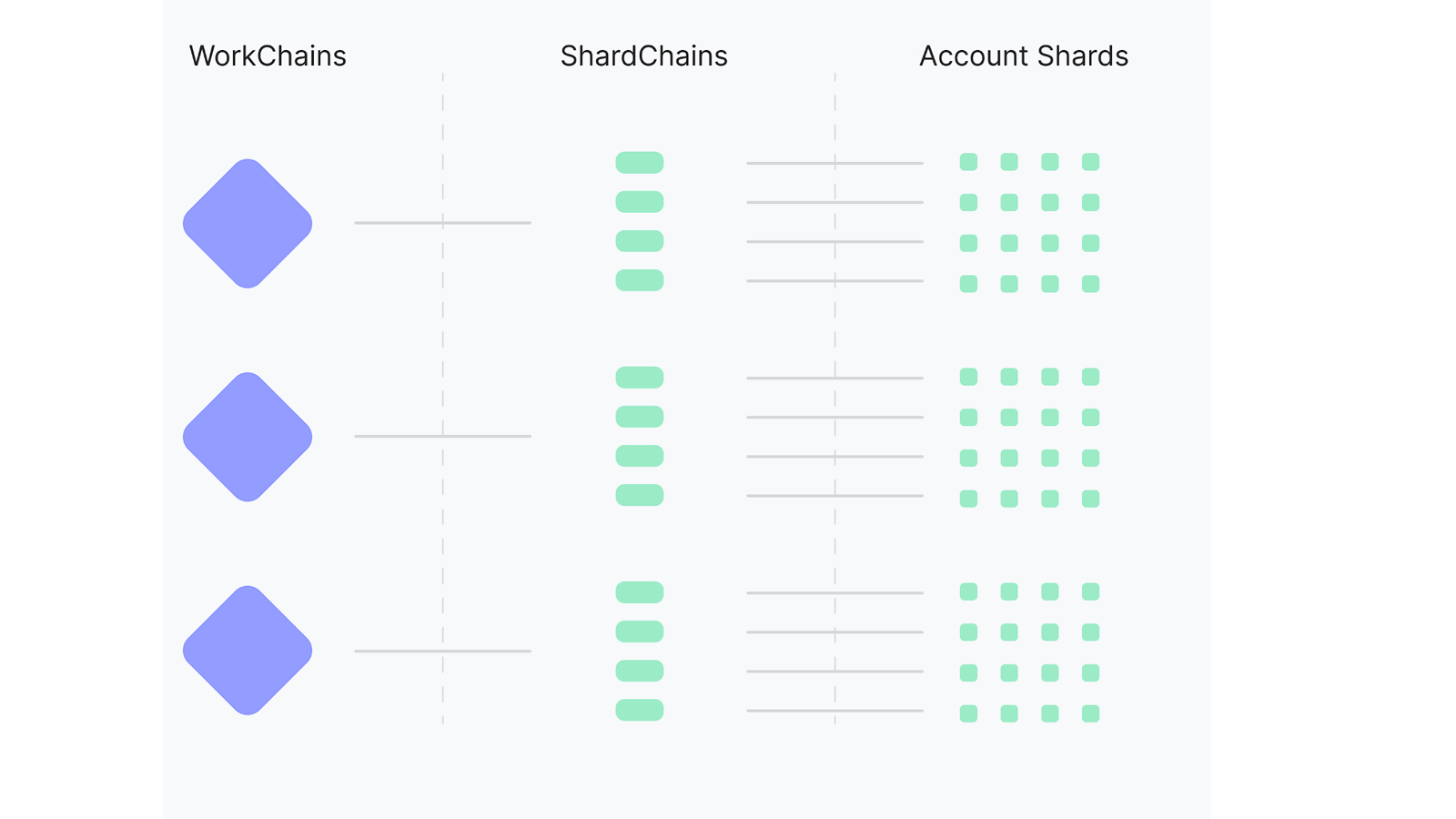
Shardchains are physical execution partitions inside a workchain
Accounts are grouped by address prefixes. Each shardchain processes its own account subset while its blocks remain part of global TON state.
Accountchain is a useful conceptual abstraction
Documentation describes each account as the sole citizen of a virtual accountchain. Rarely changing accountchains are aggregated into shardchains so the network does not produce empty blocks for every account.
Dynamic sharding changes shard count according to load
TON's Infinite Sharding Paradigm lets workchains split shards when transaction load rises and merge adjacent shards when load declines.
A shard is defined by an account-ID prefix
A shardchain is identified by '(workchain_id, shard_prefix)'. Accounts whose IDs begin with that prefix belong to the shard.
Split turns prefix p into p0 and p1
When shard 'p' becomes too busy, it divides into two child shards and accounts are separated by the next relevant bit of their IDs.
Merge combines p0 and p1 back into p
When load decreases, sibling shards can merge. Physical execution topology changes without forcing public account addresses to migrate.
User addresses do not change when shards split or merge
An address contains workchain ID and account ID rather than the current shard identifier.
Scalability still depends on partitionable state
Dynamic sharding helps when workload is distributed across many accounts. One globally hot mutable contract can still become a contention point.
Sharding increases parallel network capacity but does not make one mutable account infinitely parallel. Application design still benefits from partitioned state and avoiding global hot spots.
Hypercube routing moves messages across shards
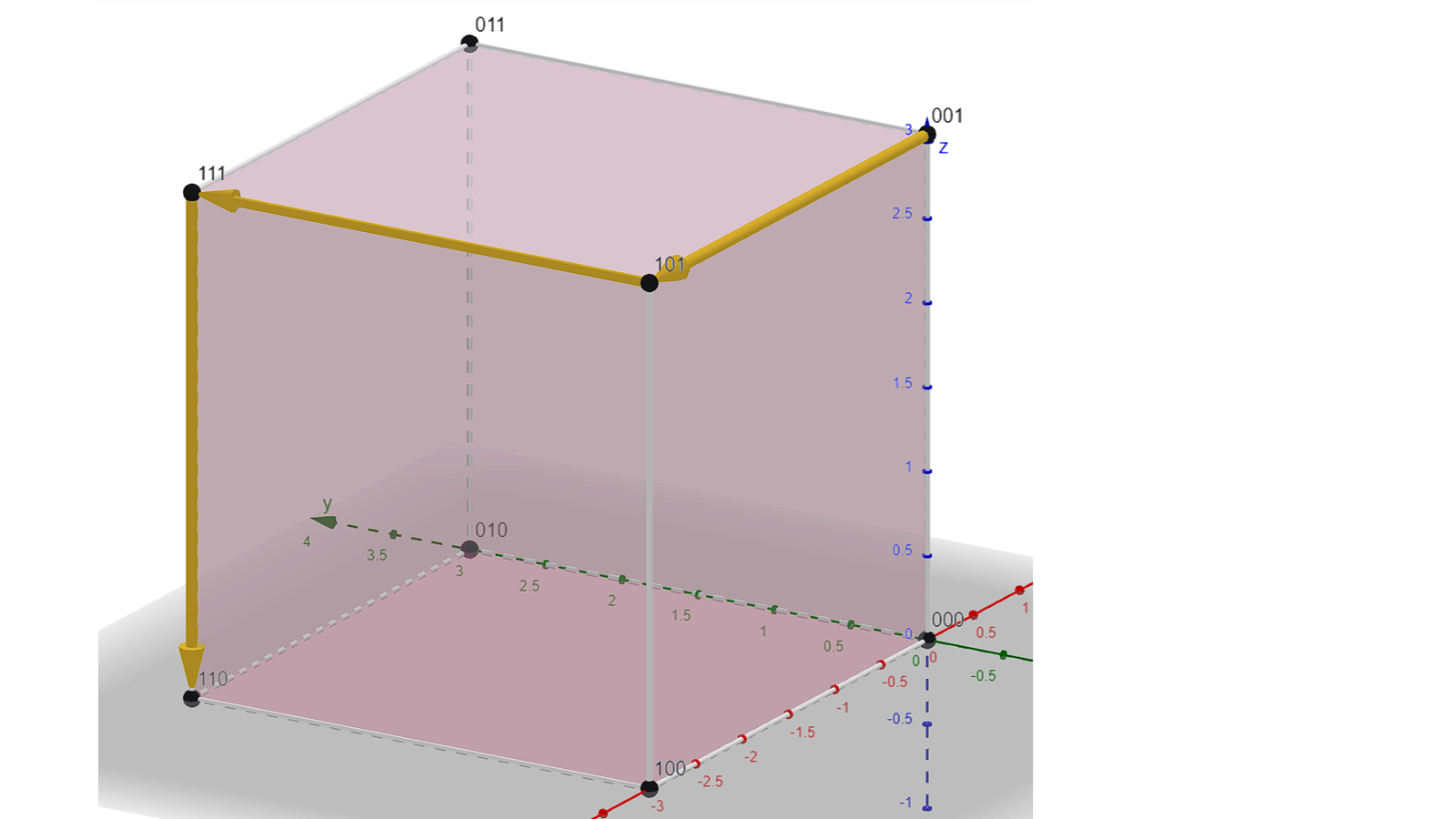
After dynamic splitting, sender and destination accounts may sit in different shardchains. TON uses hypercube routing so each shard does not need direct connectivity with every other shard.
Routing follows differences in shard prefixes
Shard topology is represented through multidimensional neighbor relationships. A message moves across neighbor shards toward the destination prefix.
A simplified three-bit example takes multiple hops
TON Docs gives the example '001 → 101 → 111 → 110', demonstrating that cross-shard delivery is routed rather than synchronous shared-memory access.
The production design uses up to 15 routing dimensions
Current documentation describes a more complex hypercube with bounded neighborhood size, reducing the direct-connectivity burden compared with an all-to-all shard graph.
Cross-workchain interaction adds another boundary
If source and destination are in different workchains, routing crosses a workchain boundary, important for future workchains with different rules or VMs.
Routing latency is part of application semantics
A contract should not assume a message to another shard is processed “inside the same transaction.” TON's programming model is asynchronous by design.
Messages are the primary mechanism of smart-contract execution
TON accounts change state when processing messages. Developers should think “a message triggers a transaction that may create new messages,” not only “a transaction calls a contract.”
Incoming external messages come from outside the blockchain
Wallet software or an off-chain service can construct a signed external message and send it to a wallet or smart-contract account. The external message itself does not bring native value from outside the blockchain.
Internal messages carry value and payload between accounts
A smart contract creates an outgoing internal message; the destination later processes it in its own transaction. Internal messages can carry native value and pay processing and forwarding costs.
Outgoing external messages publish data to off-chain consumers
A contract may emit an external-out message. That is not a transfer to another on-chain account.
A message is intent; a transaction is the actual state change
TON's overview distinguishes destination/value/data intent from the transaction recording processing results, state changes, fees and generated messages.
Bounce can return value after failed delivery under applicable modes
Bounce semantics are important for safe smart-contract transfers. Incorrect bounce flags or send modes can produce unexpected fee and value outcomes.
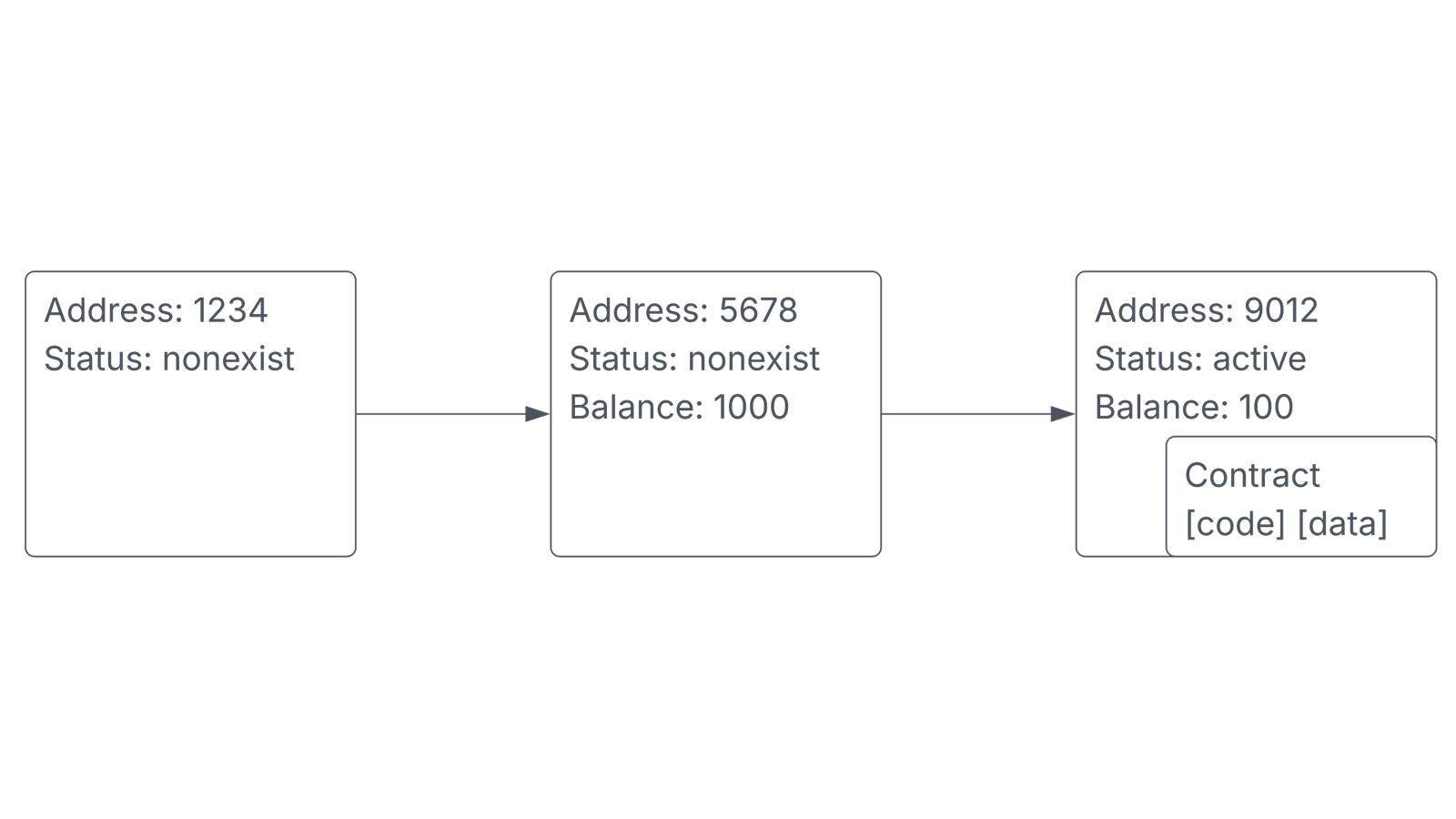
One user action can create an entire trace
A swap, Jetton transfer or dApp payment often consists of multiple account transactions linked by internal messages. Explorers should expose the **trace**, not only one hash.
A TON transaction has execution phases rather than one EVM-like call result
An ordinary transaction is produced while processing an incoming message and runs through protocol-defined phases.
Storage phase accounts for persistent state cost
The network collects storage fees. Long-unfunded accounts can change status, including becoming frozen under applicable conditions.
Credit phase applies incoming value
Credit and storage ordering depends on message bounce semantics.
Compute phase runs TVM code
If the destination is active and execution conditions are satisfied, TVM runs the smart contract. A failed compute phase prevents the expected action-phase effects.
Action phase applies sends and other state actions
Contract output actions can create messages, modify code or data and perform other protocol operations.
Bounce phase can return part of the value after failure
For bounceable incoming messages, a failure can create a bounce response after costs.
Logical time helps order asynchronous events
TON uses logical-time fields together with block and account ordering. LT is important for explorer and API pagination, especially when one trace crosses shards.
A successful source transaction does not guarantee downstream success
A source contract may successfully send an internal message while the destination transaction later fails or bounces. Payment backends should inspect the final trace result.
A TON wallet is a smart contract rather than a built-in EOA type
Ethereum has a protocol-level externally owned account type. TON wallets are usually standardized smart contracts.
The public key controls wallet-contract logic
The wallet validates external-message signatures, seqno or replay protection and creates internal messages to recipients.
Seqno protects against replay
Resubmitting an old signed wallet request should not execute the transfer again after seqno has advanced.
Different wallet versions provide different capabilities
TON Docs maintains multiple wallet families and versions, including ordinary wallets, highload wallets and gasless-oriented patterns.
The address depends on StateInit
A contract address derives from its workchain and hash of initial code and data. Wallet identity is therefore tied to a particular contract implementation and initialization state.
A user transfer commonly has two steps
- A signed external message reaches the wallet contract.
- The wallet transaction creates an internal message to the recipient, Jetton wallet or dApp.
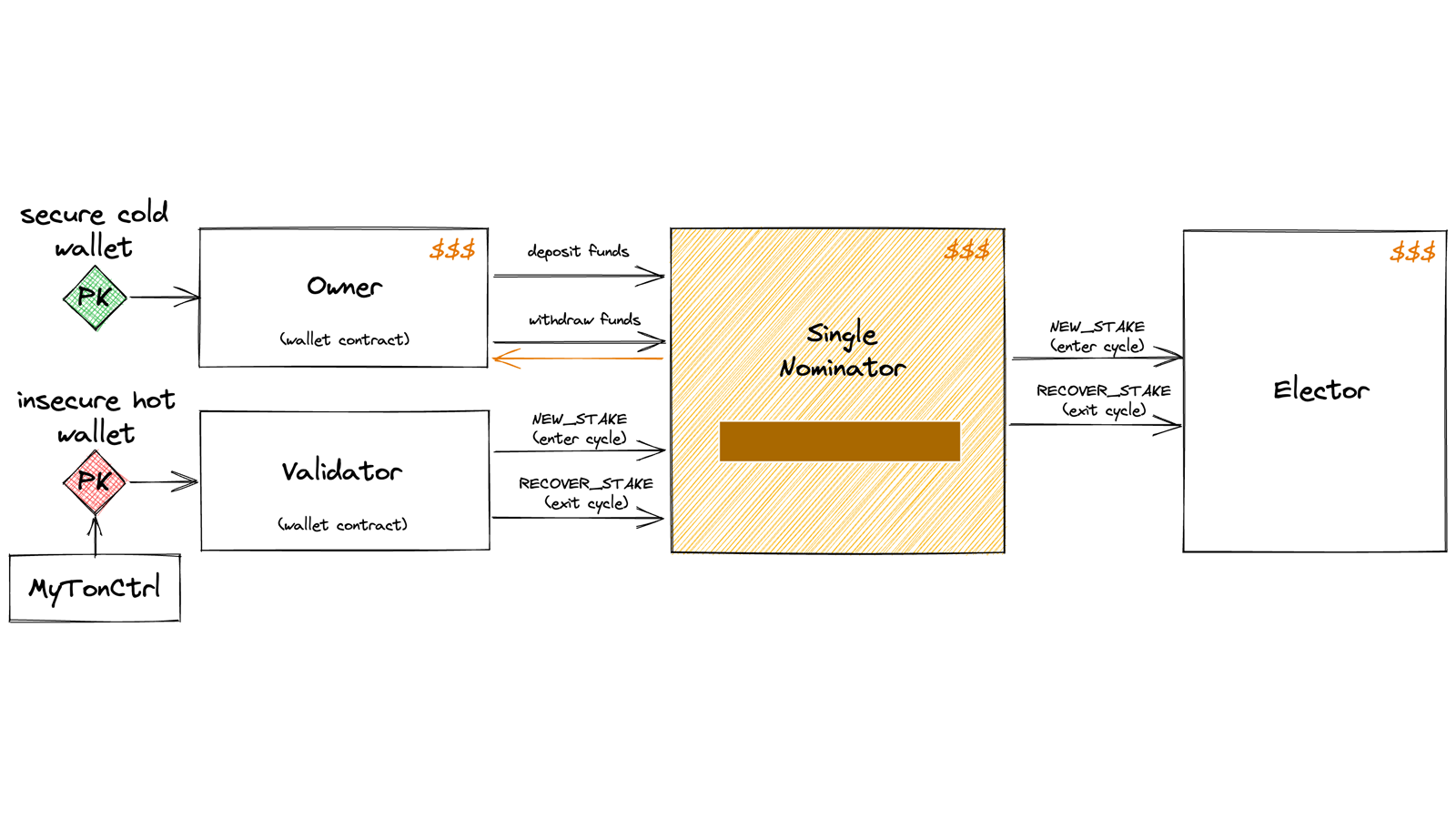
Custodial Telegram wallets and self-custodial wallets have different trust models
Using the same TON ecosystem does not imply the same custody. Users should understand whether they hold keys to a wallet contract or rely on a custodial service.
Validators, elections and staking secure the masterchain and shards
TON is a Proof-of-Stake network. Validators are selected for cycles through system-contract mechanisms and assigned validation duties.
Stake participates in validator elections
Current TON staking documentation describes the Elector and system-contract flow. Operators submit stake and participate in the validator-set formation process.
The economic minimum is dynamic
Documentation warns that the technical minimum should not be interpreted as the practical inclusion threshold. The smallest accepted validator stake depends on the current election competition and can be materially higher.
Validator duties include masterchain and shard work
The validator set is rotated and assigned across shard responsibilities while the masterchain coordinates global state.
Catchain-family BFT determines block acceptance
Current TON materials describe Catchain-family BFT mechanisms, and the current TON site also references Catchain 2.0. This is not proof-of-work longest-chain mining.
Misbehavior can create penalties or complaints
Validator economics include protocol consequences for provable harmful or incorrect behavior under network rules, not only rewards.
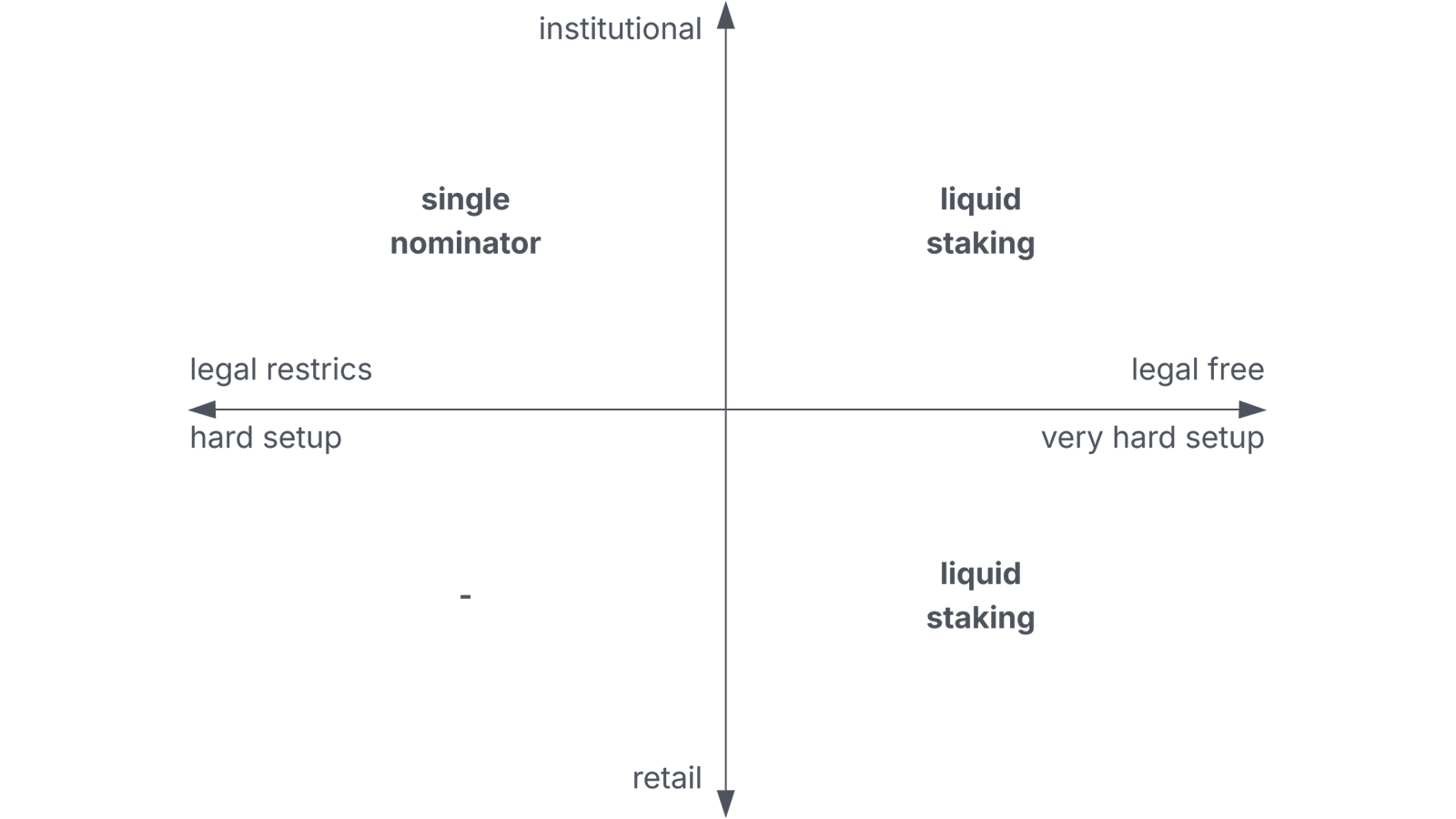
Staking-contract design changes custody risk
Single-nominator, liquid-staking and pool contracts have different ownership, withdrawal and smart-contract risks. Comparing yield without architecture is incomplete.
Validator count is not the same as independent operator count
Decentralization analysis should examine entities, infrastructure providers, geographic correlation and stake concentration in addition to validator keys.
TON and Telegram are linked through distribution while consensus remains a blockchain layer
The current TON Foundation site describes TON as originally developed by Telegram and the open-source community and emphasizes deep integration with the Telegram ecosystem.
Telegram Mini Apps can connect through TON Connect
TON Connect lets a dApp or Mini App request wallet-approved transactions without receiving the user's private key.
Telegram UX reduces onboarding friction
A bot or Mini App can provide the product experience inside the messenger while wallet confirmation connects that UX to an on-chain transaction.
Telegram-facing digital assets can use TON rails
Current TON ecosystem materials describe blockchain-based gifts, usernames, numbers and other integrations. Feature policy is controlled by the Telegram product while on-chain ownership and transfer follow the relevant contracts.
Distribution does not mean Telegram finalizes TON blocks
Validator consensus, staking and shard production are separate from the frontend distribution channel. A Telegram outage and a TON consensus halt are different incident classes.
TON Connect is the protocol boundary between application and wallet
A Mini App should never need a seed phrase. It builds a transaction request, the wallet displays and signs it, and the signed message is submitted to TON.
Telegram distribution can accelerate adoption, but it is not a cryptographic security guarantee. User security still depends on wallet custody, contract code, the signed message and validator consensus.
USDT on TON follows a Jetton payment path rather than native-coin accounting
Tether's current Supported Protocols page lists **Ton Jetton via Ton Blockchain** among supported deployments.
Jetton is TON's fungible-token smart-contract model
Each holder generally interacts through a Jetton wallet contract linked to the token master contract. USDT transfer is therefore not merely changing a native account balance field.
Payment begins with a user-wallet message
The user's wallet sends an internal message containing a transfer instruction and enough value for execution and forwarding to the relevant Jetton wallet contract.
A Jetton wallet sends to the recipient Jetton wallet
Token accounting is updated by contract logic, and a recipient Jetton wallet may need deployment if it does not already exist.
Notification may be another message
A merchant backend should verify the correct Jetton master, recipient wallet, amount, transaction trace and transfer-notification semantics rather than only one inbound native transaction.
Gas is paid in the native network coin rather than USDT
Jetton operations require network fees. Users need enough native balance for execution and message forwarding.
Fake Jettons are a real phishing vector
The ticker 'USDT' does not prove authenticity. Integrations should whitelist the official Tether TON Jetton master from trusted metadata rather than accepting any token with the same symbol.
| Payment layer | What to verify |
|---|---|
| User wallet | Signature, seqno, destination |
| Jetton master | Official token identity |
| Sender Jetton wallet | Correct owner/master relationship |
| Recipient Jetton wallet | Correct owner/master linkage |
| Trace | Downstream messages and bounce/success |
| Native gas | Enough balance for processing |
Telegram UX does not remove Jetton verification
A polished “Pay USDT” button inside a Mini App must ultimately perform the same on-chain checks as a standalone payment processor.
TON explorers should be read through traces, shards and message links
A single transaction hash often represents only one vertex of a user operation.
Start with the account and inbound message
Identify which account executed the transaction, what message triggered it and which workchain and shard contained the block.
Then follow outgoing messages
Each outgoing internal message can create a new destination transaction. An explorer or indexed API should link source and destination.
For Jettons, inspect master and wallet relationships
A displayed symbol is insufficient. Verify the Jetton master and token-wallet ownership relationship.
For failures, look for bounce behavior
A source transaction can succeed while the destination fails and bounces. Financial systems should classify the entire trace rather than the first green status.
Block and shard context explain some latency differences
When a message crosses shard boundaries, indexers can show separate processing stages and timestamps consistent with asynchronous architecture.
Telegram Mini App debugging has four distinct layers
- Mini App or frontend.
- TON Connect and wallet approval.
- Network message inclusion and execution.
- Destination contract and downstream trace.
Main conclusion and FAQ
Main conclusion
TON scales through **dynamic state partitioning and asynchronous messages**. The masterchain coordinates global network state, the basechain and other workchains contain accounts, and shardchains split or merge according to load. Accounts do not call each other as synchronous shared-memory functions; they process messages and create new messages that can route across shards through the hypercube.
A wallet is itself a smart contract, so an ordinary payment starts with a signed external message, becomes a wallet transaction and then an internal message to the recipient. A Jetton payment such as USDT adds token-wallet contracts and a multi-transaction trace. Validators, elections and staking secure the network independently of Telegram, while Telegram Mini Apps and TON Connect provide distribution and wallet UX.
The production question for TON is therefore: **which workchain and shard process the account, which message triggered the transaction, where downstream messages went, whether the complete trace succeeded, which validator consensus accepted the state, and whether the Jetton is the authentic official asset.**
What is a workchain in TON?
It is a blockchain namespace with its own account space and potentially different address, transaction and VM rules. Most current user activity runs in basechain workchain 0, while masterchain uses ID −1 for global coordination.
What happens during dynamic sharding?
A busy shard with prefix 'p' can split into 'p0' and 'p1'; when load falls, siblings can merge back into 'p'. Public account addresses do not change.
Why does TON use messages instead of synchronous contract calls?
The asynchronous message model lets accounts and shards execute in parallel and route work without requiring one global lock-step transaction.
Is a TON wallet equivalent to a MetaMask EOA?
No. A standard TON wallet is a smart contract that checks signatures and seqno and creates internal messages for the user's transfers.
Does Telegram control TON validator consensus?
No. Telegram is a distribution and integration ecosystem for Mini Apps, wallets and assets. TON validators and Proof-of-Stake consensus form a separate blockchain layer.
Is USDT on TON the native coin?
No. Tether lists USDT on TON as a **Ton Jetton**. Payment processors should verify the official Jetton master and associated token-wallet contracts, while network gas uses the native coin.
Why can a source transaction succeed while the payment still fails?
Because the source account can successfully emit an internal message while the destination transaction later fails or bounces. The full trace must be checked.
This material is educational and does not constitute financial advice.