
A cross-chain transfer often looks like an ordinary payment: choose a source network, destination network and token, then click Bridge. Technically, however, blockchain A cannot automatically “see” a finalized event on blockchain B without a verification mechanism. A bridge is therefore not a transport tunnel. It is a system for proving that an event happened on one side so the other side is allowed to mint, unlock or execute a message.
A bridge solves the problem of proving another chain's state
Independent blockchains have their own consensus, validator sets and canonical histories. Ethereum does not automatically trust a Solana block, a Cosmos chain does not automatically accept an Ethereum receipt, and an L2 is not literally part of L1 execution state.
To move value or information, a bridge must answer one question: **what evidence is sufficient for the destination chain to believe an event on the source chain?** The answer is the bridge's trust model.
Moving value and moving information share the same core
A token bridge can be modeled as a messaging protocol with accounting logic. First the system proves the message “one ETH was locked on source for destination address X.” Then the destination contract mints a representation or opens a claim.
A bridge does not teleport the original token
Native ETH does not physically leave the Ethereum ledger. In a lock-mint design it remains locked in a source contract while the destination chain mints a wrapped representation. Economic equivalence depends on bridge accounting.
Backing matters more than the ticker
Two tokens with the same USDC or ETH symbol on a destination chain can have different origins: native issuance, canonical bridge representation or third-party wrapped asset. Their redemption paths and security assumptions differ.

Lock-mint locks value on source and mints a representation on destination
The classic flow is:
- A user sends a token to the bridge contract on the source chain.
- The contract locks the asset and emits an event or message.
- The verification layer confirms that event is sufficiently final.
- The destination bridge mints a wrapped representation.
- On the return trip, the representation is burned and the source asset is unlocked.
The accounting model is intuitive: locked collateral should correspond to minted representation.
The core lock-mint invariant
Redeemable wrapped supply must not exceed confirmed locked backing. If an attacker can mint without a corresponding lock, unbacked supply appears. If source collateral can be withdrawn while destination representation remains live, backing also fails.
A bridge vault becomes a honeypot
The more TVL one vault or multisig controls, the more valuable an exploit becomes. Bridge analysis must therefore include both message verification and custody of source collateral.
If a bridge protects a billion-dollar vault with a small validator quorum, the effective security of that vault is the quorum—not the combined market capitalization of the connected chains.
Burn-mint moves canonical supply between issuers
Some assets support native mint and burn on several chains. A cross-chain transfer can then avoid a collateralized wrapper. Tokens are burned on source and an equivalent amount is minted on destination after the burn is proven or attested.
Total canonical supply remains controlled if mint authority accepts only valid burn messages and no destination can mint without proof.
A CCTP-like model differs from lock-mint
For a native stablecoin issuer, burn-mint can reduce liquidity fragmentation because the destination receives the issuer's native token instead of a bridge-specific wrapper.
Trust does not disappear. The model still depends on issuer mint authority, message attestation, supported-chain contracts and operational controls.
Mint authority is a critical trust boundary
If an attacker can forge a destination mint message or compromise the issuer's authority, they can increase supply without a real burn. “Native token” therefore does not mean “no bridge risk.”
A canonical L2 bridge ties transfers to rollup settlement
A rollup bridge is a special case. L2 state already has a protocol relationship with L1 through commitments, fault proofs or validity proofs. The canonical bridge uses that settlement path for deposits and withdrawals.
L1-to-L2 deposits are generally simpler: the L1 contract records the deposit and the L2 system includes the corresponding message or state transition. L2-to-L1 withdrawals must convince L1 that the claim belongs to canonical L2 history.
Optimistic withdrawals inherit the challenge period
In an optimistic rollup, withdrawal can wait through the dispute window because L1 still allows incorrect state roots to be challenged. A third-party liquidity bridge can pay the user earlier while assuming or redistributing settlement risk.
ZK-rollup withdrawals depend on the proof pipeline
A validity rollup can complete correctness after proof verification, but latency still depends on batch frequency, proof generation and L1 inclusion/finality.
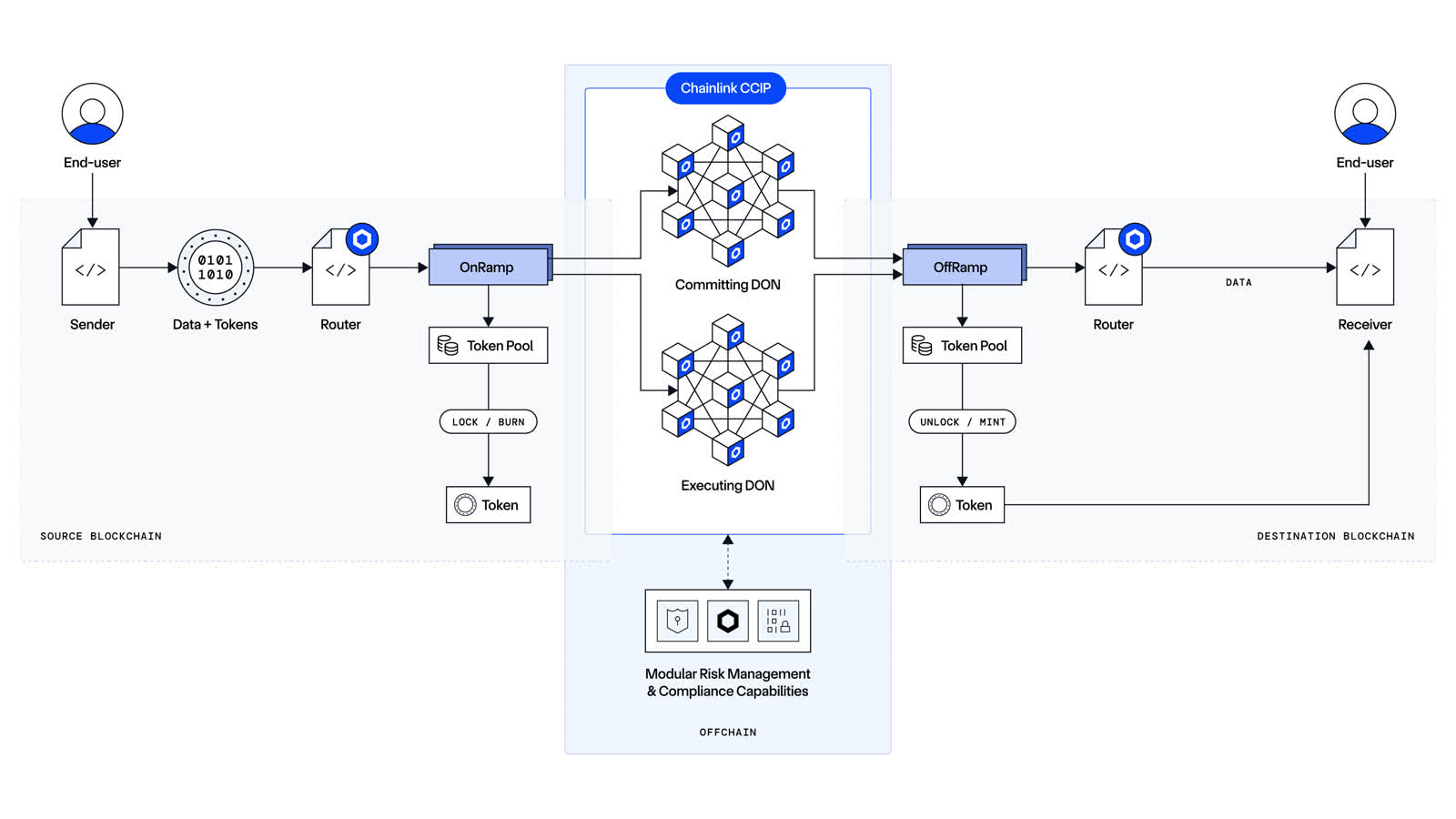
Guardian or validator bridges trust a separate signer set
Wormhole-style architecture uses Guardians: independent operators observe supported chains and sign messages. After the required quorum signs, a VAA (Verified Action Approval) can be verified by destination contracts.
This is not the same as running a light client of both chains. The destination trusts that enough Guardians correctly observed the source chain and signed the right event.
The advantage is universality
A guardian network can support chains with very different consensus systems without implementing a complete on-chain light client of every source chain inside every destination chain.
The cost is a separate validator trust set
The security root now includes Guardian keys, quorum rules, software and governance membership. Source and destination chains can both be healthy while a compromised bridge validator set creates a separate failure path.
A light-client bridge verifies another chain's consensus on-chain
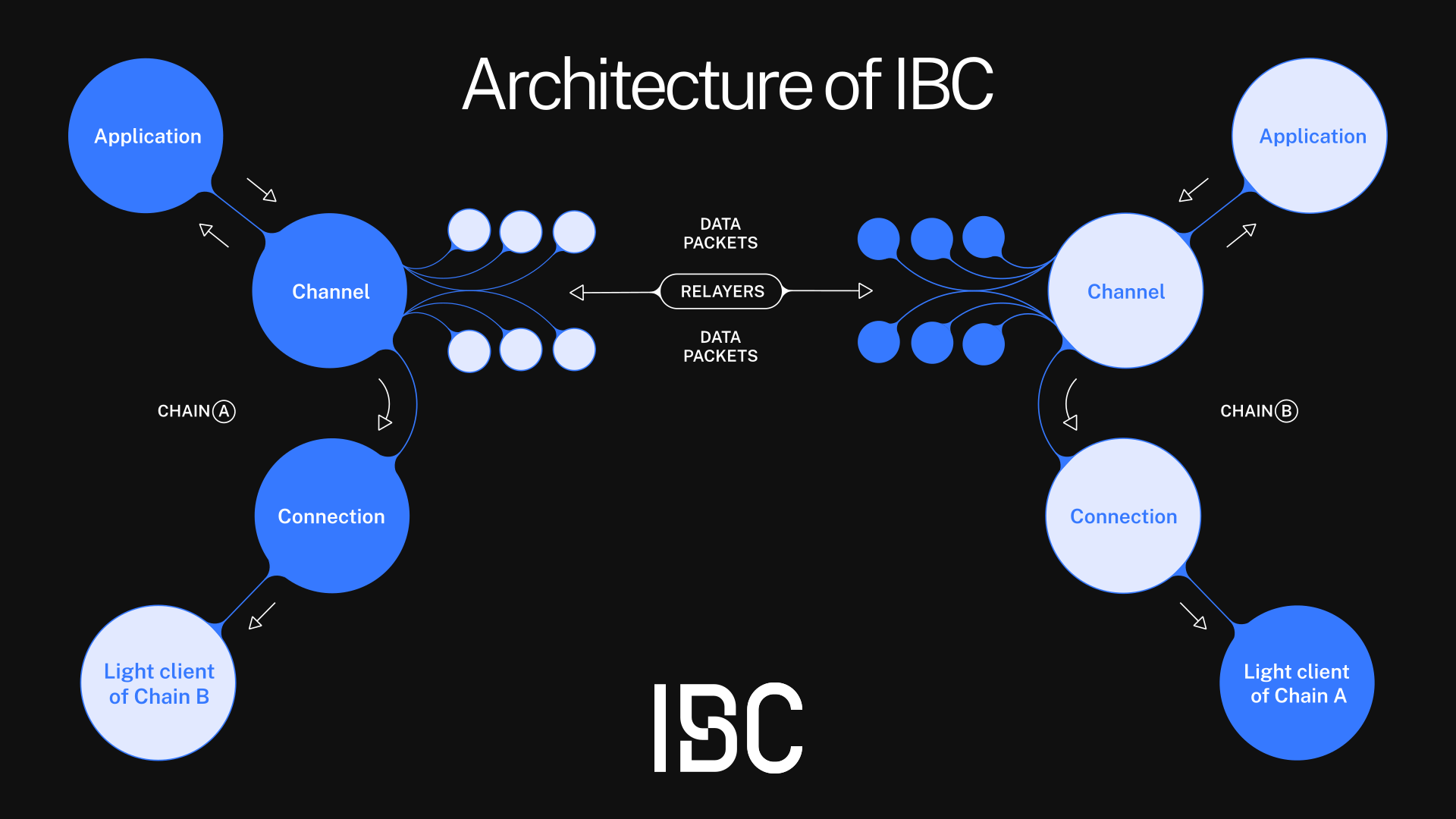
A more trust-minimized design lets the destination maintain a light client of the source chain: headers, validator commitments, consensus proofs and update rules. A message is accepted only when its inclusion proof verifies against a header the light client recognizes as canonical or finalized.
IBC builds interoperability around light clients, connections, channels and packet commitments. Instead of “a signer quorum said the event happened,” the protocol verifies cryptographic evidence relative to the other chain's consensus state.
Light client does not mean zero trust
Users still depend on correct light-client implementation, source-consensus assumptions, relayer liveness and governance or upgrades. On-chain verification can also be expensive and technically complex.
A relayer does not have to be trusted for correctness
In a proof-based system, the relayer transports messages and proofs. A forged proof is rejected by the destination verifier. A relayer can still harm liveness by refusing to deliver packets without necessarily being able to forge correctness.
Verifying consensus consumes resources
The more complex the source consensus, the harder and more expensive the verifier can be. This is one reason universal bridges often choose external attestation networks rather than pairwise light clients.
Finality mismatch is one of the most underestimated bridge risks
A source-chain event should not be treated as final simply because it appears in a block explorer. The bridge must choose a finality threshold: N confirmations, finalized checkpoint or another protocol-specific proof.
If the bridge mints destination assets too early and a source-chain reorg removes the original lock or burn, destination representation can exist without a canonical source event.
Different chains have different finality semantics
Bitcoin confirmation depth, Ethereum finalized checkpoints, Tendermint-style instant finality and optimistic-rollup challenge state are different concepts. A bridge must translate those semantics into its own state machine correctly.
A faster bridge often introduces risk capital
A liquidity network can pay destination funds before canonical settlement from its own pool. The user gains speed while the provider assumes reorg, finality and liquidity risk and prices it into the fee.
Why bridges fail: the attack surface is wider than one smart contract
Bridge failures can be classified by layer:
| Layer | Typical failure mode | What breaks |
|---|---|---|
| Source custody | Vault exploit / admin key | Locked backing |
| Verification | Forged proof / compromised quorum | False message accepted |
| Message replay | Nonce or domain bug | Valid message executed twice |
| Destination mint | Access-control bug | Unauthorized supply |
| Finality | Source reorg accepted too early | Unbacked destination state |
| Upgrade/governance | Malicious or compromised admin | Verification rules changed |
| Relayer | Outage or censorship | Liveness, not necessarily correctness |
| Frontend | Fake route or contract | User signs wrong transaction |
Replay protection must bind messages to a domain
A signed message should include source chain, destination chain, nonce or sequence and payload identity. Otherwise a valid signature in one context could be replayed in another.
Upgradeability makes the admin key part of bridge security
Even a perfectly audited verifier can be replaced through a proxy admin. Timelocks, multisigs, governance quorum and emergency pause authority are part of the threat model, not operational trivia.
Bridge security is defined by the weakest verification or custody path, not by how many chains appear in the interface.
How to compare a bridge before using it
Do not start with APY, points or speed. First identify **what asset you receive on the destination and what evidence backs it.**
- Is it native or wrapped?
- Where is backing held?
- Who can mint or unlock?
- How does destination verify source events?
- Is verification based on a quorum or light client?
- How much finality does the bridge wait for?
- Are there rate limits and circuit breakers?
- Who controls upgrades?
- How can users exit during relayer outage?
- Is there a canonical redemption path without the frontend?
Liquidity bridge and canonical bridge are different products
A canonical bridge optimizes for protocol settlement assumptions. A liquidity bridge optimizes UX and speed. A user may receive economically equivalent value while accepting different counterparties and failure modes.
TVL is not a security score
Large TVL proves adoption and simultaneously increases attack incentives. It does not prove correctness of verification logic or key management.
The main conclusion
A cross-chain bridge is a verification system. Lock-mint keeps backing on source and creates representation on destination. Burn-mint moves canonical supply through controlled destruction and issuance. Guardian bridges trust an independent attestation quorum. Light-client bridges attempt to verify another chain's consensus cryptographically. Canonical rollup bridges tie transfers to the L1 settlement path.
Every model has a different security root. The useful question is not “which bridge brand is safest?” It is: **who or what proves the source event, how is finality handled, where is backing stored, who can change verification rules, and how does the user recover if intermediaries stop working?**
FAQ
What actually happens when ETH is bridged to another network?
Often ETH is locked in a source contract and the destination receives a wrapped or bridged representation. In canonical L2 bridges, accounting can be directly tied to rollup settlement.
How is burn-mint different from lock-mint?
Lock-mint retains the source asset in a vault and creates representation. Burn-mint destroys the canonical source token and creates an equivalent canonical destination token after burn verification.
What is a light-client bridge?
It is a bridge where the destination verifies source-chain headers and cryptographic proofs under the source consensus rules rather than trusting a separate multisig or guardian quorum.
Is a guardian bridge centralized?
It uses a bounded validator or guardian set. Its degree of decentralization depends on membership, quorum, key security and governance. It is a separate trust model from the connected chains.
Why do bridges wait for confirmations or finality?
To reduce the chance that the source event disappears in a reorg. Minting or unlocking before sufficient finality can create destination state without canonical backing.
Can a bridge be safer than the chains it connects?
Not end-to-end. It depends on both source and destination security plus its own verification layer. Additional mechanisms can reduce particular risks but also add new attack surface.
This material is educational and informational. It is not financial advice or a trading signal.